When I was younger, I enjoyed reading those Where’s Waldo picture books. I spent much of my time trying to find each figure, searching throughouly. However, I had trouble finding the figure each time I pulled out the dusty books. You know what to look for, but it’s so hard to find. Spending hours pouring over that singular picture searching for one striped figure… only to find you’d been glazing over the same spot multiple times.
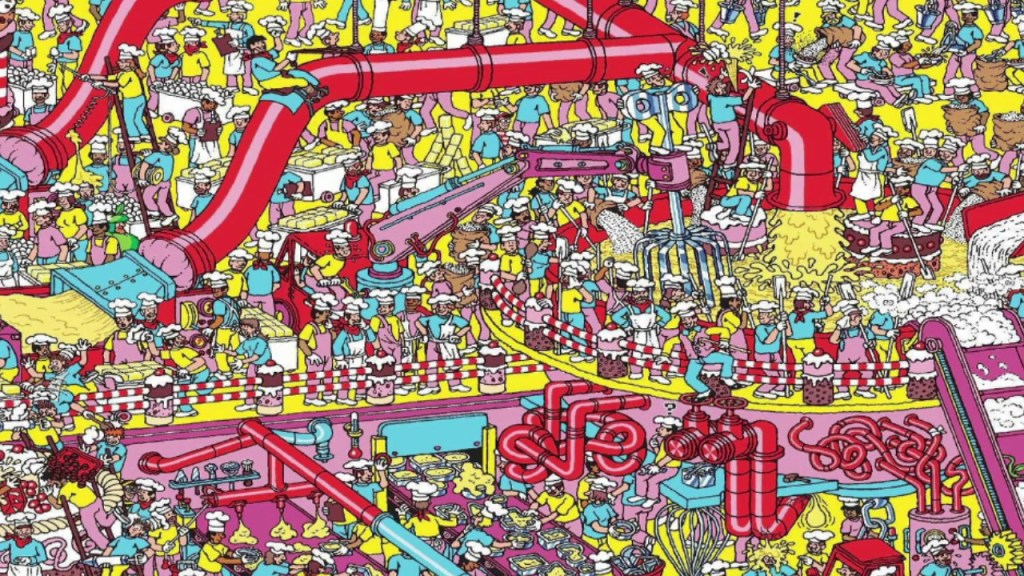
Sometimes, it can feel like you’re playing Where’s Waldo when trying to find how physics applies to real life.
A specific rule that’s hard to find other than in a skatepark is the Law of Conversation of Energy.
Or it seems to be so.
In reality, our eyes are just glazing over the examples like they would over Waldo in those picture books. There are many examples of the Law of Conservation of Energy in real life. One, for example, is a simple game of 8-Ball.
When playing pool, the cue ball is shot at a stationary 8 ball. The cue ball has energy. When the cue ball hits the 8 ball, the energy transfers from the cue ball to the 8 ball, sending the 8 ball into motion. The cue ball loses energy because the energy it had has been transferred to the 8 ball, so the cue ball slows down.
Another example of this Law in action can be observed in a parking lot, granted you happen to be in the wrong place at the wrong time or see someone who is.
When a moving car hits a parked car and causes the parked car to move, energy is transferred from the moving car to the parked car.
Or maybe if you’re in an English seminar, or a book club, you could observe this law without even knowing it.
When you push a book across the table, the energy from your moving arm is transferred from your body to the book, causing the book to move.
All of these reflect the use of the Law of Conservation of Energy in the real world. Although hard to find at first, they’re very simple. Do you have the feeling of satisfaction that you’ve finally found some good examples? I do!
 For The Physics