Calculating KE and PE

When calculating energies, you can have a bit of trouble with the seemingly daunting task.

However, what if someone told you it would only take your THREE steps to do it?

It’s possible, and many people do it every day in the Physics classroom and other professional environments.

They do this by using formulas.

To calculate KINETIC energy, the formula is: KE = .5mv^2.

This formula is very useful in Physics and is an essiential for your every day class. It’s half of mass multiplied by m/s squared. It gives you the kinetic energy in a quick, three step calculation.

To calculate POTENTIAL energy, the formula is: PE = mgh OR wh.

This formula is like this because since the formula for potential energy is weight times height, in order to get that, it depends on the gravity of the planet it’s on. To get weight you’d need to multiply mass by gravity, which is why there’s two variations of the formula that ultimately get you the same answer for potential energy.

Both of these three step formulas come in handy for me all the time. I hope they help you as well!

The woes of family trees

Family trees can be an interesting subject. It is especially the case with Sirius Orion Black from Harry Potter. He was blasted off his family tree by his mother, Walburga.

Sirius Black’s family tree. The dark spots are all the spots blasted off by Walburga.

A family tree is generally a map of your family’s history. Who married who? Who is the child of whom? It solves the questions of Do I have cousins? Siblings? Other relatives? and tracks the origins of a family.

In a way, it is a system of sorts to show your family’s heritage.

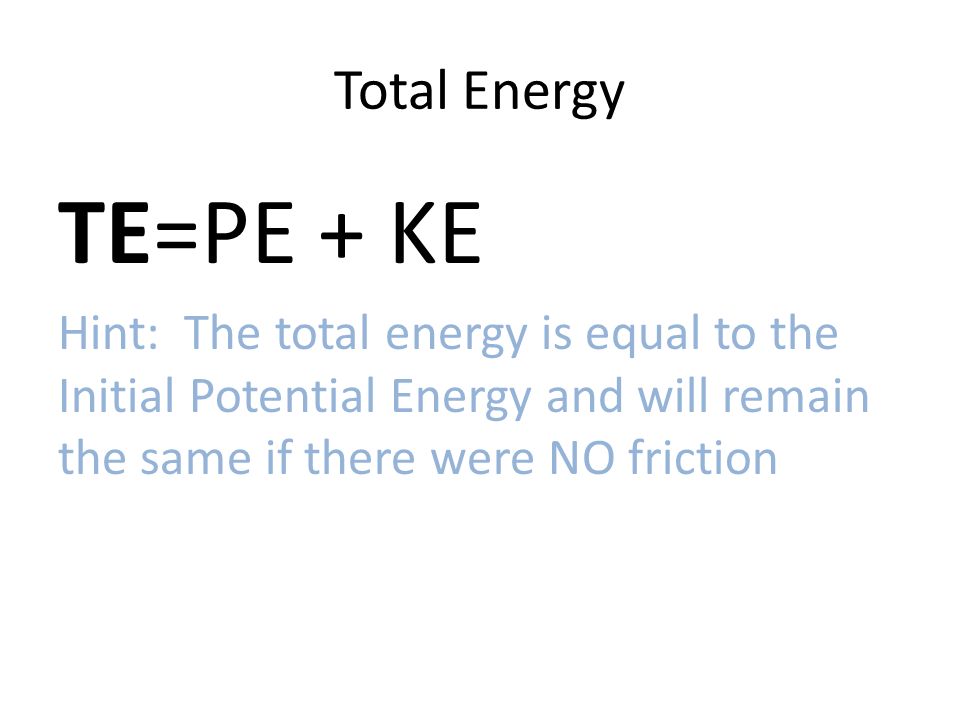
One important system that we’ll be talking about today is how potential, kinetic, and total energy are related!

This system only works in a setting where things are under the influence of a conservative force field (ie gravity.)

The equation is as shown above: Total energy equaling potential energy plus kinetic energy.

In a way, this is a family tree of sorts.

I know what you’re thinking: Jeez, what is wrong with them?

BUT– it makes sense. Let me explain.

Potential Energy, or another name, Petunia Evans, and Kinetic Energy, or Kyle Evans, are the parents of Total Energy, or Timmy Evans. Timmy Evans has half the DNA of his mom, Petunia, and half the DNA of his dad, Kyle. Both their DNA together makes up Timmy!

Likewise, potential and kinetic energy both make up total energy.

It’s indeed a family tree! What’s something interesting about your family tree? Comment below!

In the real world: The Law of Conversation of Energy

When I was younger, I enjoyed reading those Where’s Waldo picture books. I spent much of my time trying to find each figure, searching throughouly. However, I had trouble finding the figure each time I pulled out the dusty books. You know what to look for, but it’s so hard to find. Spending hours pouring over that singular picture searching for one striped figure… only to find you’d been glazing over the same spot multiple times.

A page from a Where’s Waldo picture book.

Sometimes, it can feel like you’re playing Where’s Waldo when trying to find how physics applies to real life.

A specific rule that’s hard to find other than in a skatepark is the Law of Conversation of Energy.

Or it seems to be so.

In reality, our eyes are just glazing over the examples like they would over Waldo in those picture books. There are many examples of the Law of Conservation of Energy in real life. One, for example, is a simple game of 8-Ball.

When playing pool, the cue ball is shot at a stationary 8 ball. The cue ball has energy. When the cue ball hits the 8 ball, the energy transfers from the cue ball to the 8 ball, sending the 8 ball into motion. The cue ball loses energy because the energy it had has been transferred to the 8 ball, so the cue ball slows down.

Another example of this Law in action can be observed in a parking lot, granted you happen to be in the wrong place at the wrong time or see someone who is.

When a moving car hits a parked car and causes the parked car to move, energy is transferred from the moving car to the parked car.

Or maybe if you’re in an English seminar, or a book club, you could observe this law without even knowing it.

When you push a book across the table, the energy from your moving arm is transferred from your body to the book, causing the book to move.

All of these reflect the use of the Law of Conservation of Energy in the real world. Although hard to find at first, they’re very simple. Do you have the feeling of satisfaction that you’ve finally found some good examples? I do!

Finally found him!

An Introduction

This is an introduction post by the blogger. Science related posts will come soon.

Welcome to For the Physics!

You’re probably wondering: what’s the point?

  • Because it will help you learn about all the wonders of physics!
  • Because I enjoy physics, so I would like to share it with others!

I’m a 9th grade physics student at a highschool. I also really need to get some grades in, so I started this blog to help make my focus like a laser: small and sharp.

No one has to actually read this blog, but my physics teacher does!

SO, I hope you enjoy it Mrs.Henderson.

Create your own website, free on WordPress.com.Create your own website.
Start free